Archive | entrepreneurship RSS feed for this section

Building a Strong Company Culture with Remote / Mixed Work Environments

23 Sep

Introduction

The way we work has changed forever. Remote and hybrid setups are no longer the exception — they’re the new normal. But here’s the truth: company culture doesn’t stop when your team logs in from different cities or time zones. In fact, culture becomes even more important. A strong culture is the glue that keeps people motivated, connected, and moving toward the same vision.

1. Define and Live by Clear Core Values

Culture begins with clarity. Remote employees need to know what your business stands for, beyond just profits. Write down your core values and make sure they show up in everyday communication — whether it’s on Slack, in Zoom meetings, or through company newsletters. When people understand the “why” behind their work, distance doesn’t weaken culture; it strengthens it.

Action Step: Revisit your company’s mission and values. Share them often and tie them to decisions and wins.

2. Communicate with Consistency and Transparency

Silence creates uncertainty. In a remote or hybrid setup, overcommunication beats under-communication every time. Leaders should share updates frequently and invite feedback. Simple gestures — like weekly video check-ins or transparent progress reports — go a long way toward building trust.

Action Step: Schedule a recurring “all hands” update, even if it’s just 15 minutes a week, to keep everyone on the same page.

3. Foster Human Connection Beyond Work

Culture thrives when people feel like more than just coworkers. Build space for personal connections — virtual coffee breaks, online game nights, or casual chat channels. These small touchpoints create big loyalty.

Action Step: Start each team meeting with a quick “personal win of the week” to keep conversations human.

4. Empower Autonomy and Flexibility

Remote work shouldn’t mean micromanaging. Instead, focus on outcomes, not hours. Empower your team to own their schedules and deliverables. Flexibility shows trust, and trust is at the core of every strong culture.

Action Step: Replace rigid rules with clear goals. Let results speak louder than clock-in times.

5. Recognize and Celebrate Achievements

Recognition fuels culture. In distributed environments, it’s easy for wins to go unnoticed. Celebrate often — whether it’s a shout-out in chat, a virtual award, or simply spotlighting someone’s contribution in a meeting.

Action Step: Create a “Wins” channel where the team can highlight each other’s successes, big or small.

Conclusion: Culture is Built, Not Found

A strong company culture doesn’t happen by accident — it’s intentional. Whether your team is across town or across continents, the way you communicate, connect, and celebrate defines who you are. Build it with care, live it every day, and your culture will carry your business further than any office walls ever could.
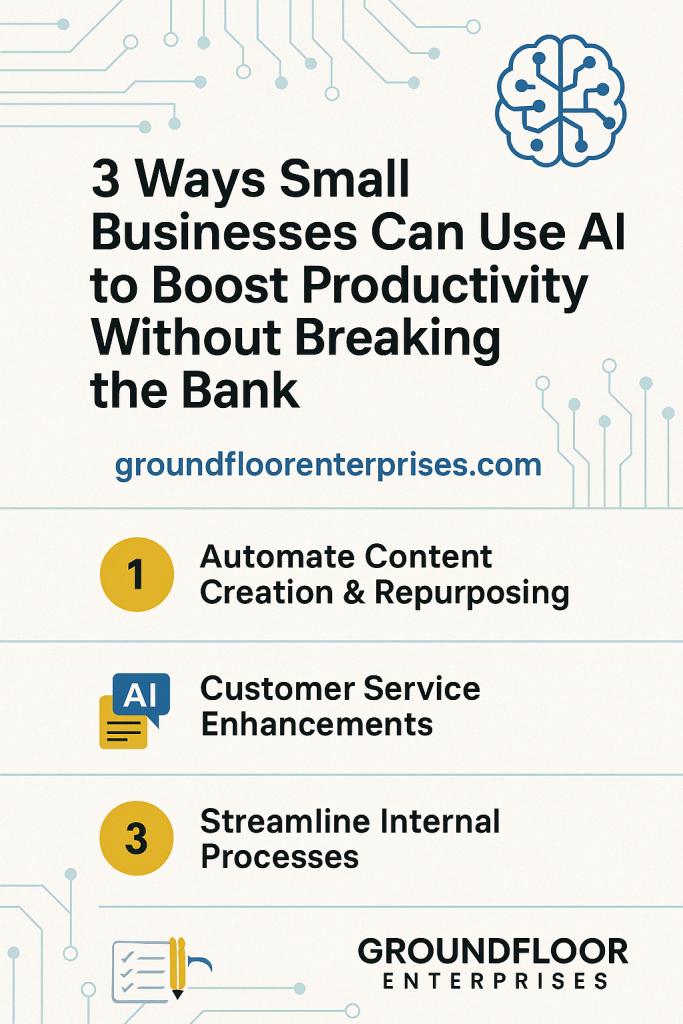
3 Ways Small Businesses Can Use AI to Boost Productivity Without Breaking the Bank

16 Sep

Introduction

AI isn’t just for big corporations. Small businesses today can tap into affordable AI tools to streamline work, reduce repetitive tasks, and free up time to focus on what matters most: growth, creativity, and customer experience.

1. Automate Content Creation & Repurposing

Use AI writing assistants (e.g. chat-based tools) to draft blog posts, social media captions, and newsletters faster. Repurpose longer blog content into short social snippets or visuals using design tools. Tip: Always add your “voice” or brand touch; review and edit so it feels human.

2. Customer Service Enhancements

Implement chatbots or AI-powered FAQs to handle common inquiries, freeing up your team for more complex requests. Use tools that help auto-prioritize customer emails or tickets. Example: set up canned responses for recurring issues, but monitor for when personalization is needed.

3. Streamline Internal Processes

Automate scheduling and reminders (for meetings, payments, deadlines). Use tools that sync data across apps (so you don’t manually enter it multiple times). Leverage voice-to-text or transcription tools to quickly convert meeting notes.

Conclusion & Action Steps

Pick one AI or automation tool to test this week. Set clear metrics: time saved, fewer errors, happier customers, etc. Re-evaluate after a month, iterate, and scale.

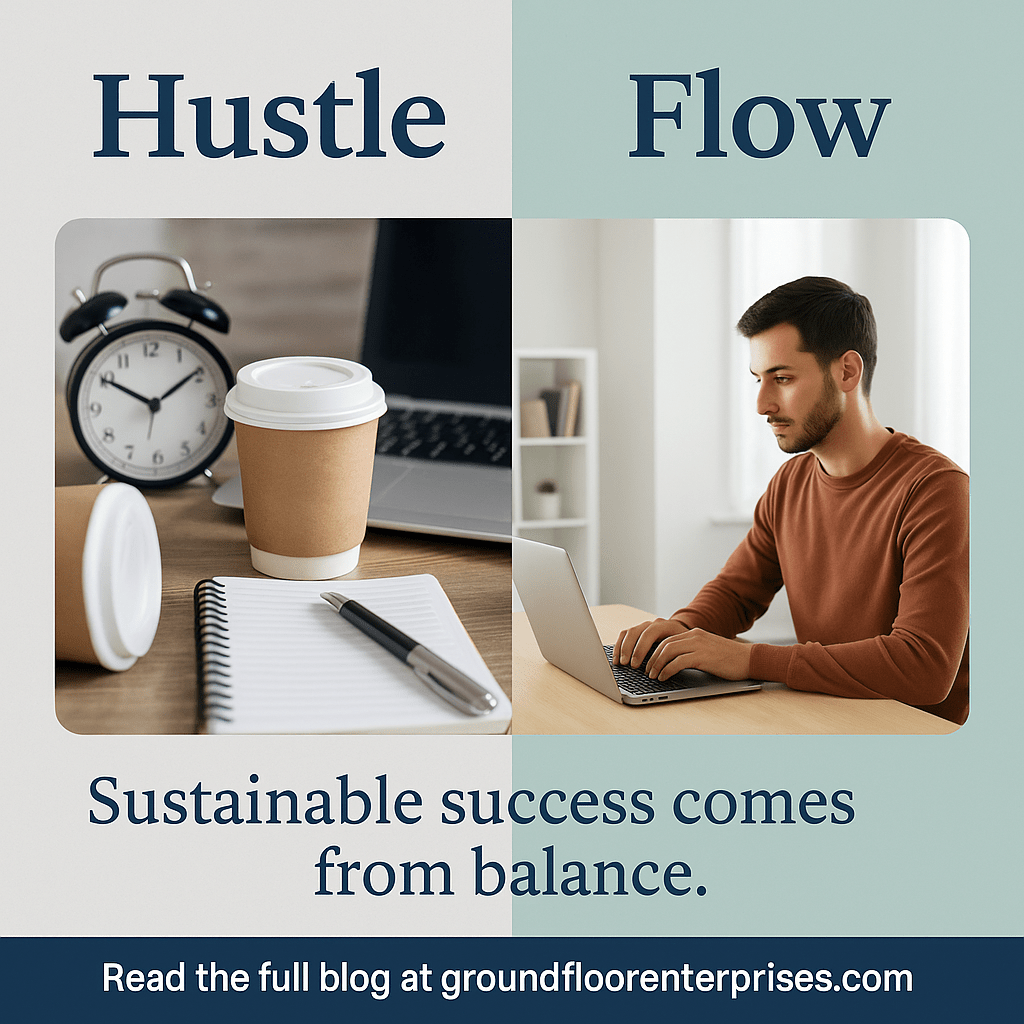
From Hustle to Flow: Why Entrepreneurs Need Balance to Grow

13 Sep

The hustle culture has been glorified for years. Late nights, early mornings, and endless grinding are often worn as a badge of honor. But let’s be honest—working yourself into the ground isn’t sustainable, and it doesn’t guarantee success. If anything, it can hold you back.

The Myth of Hustle

The idea that “more hours = more success” is a trap. Yes, entrepreneurship requires sacrifice, discipline, and hard work. But endless hustle often leads to burnout, poor decision-making, and a lack of creativity—the very things you need to grow.

When your body is drained and your mind is foggy, you’re not building a business—you’re digging a hole. True growth doesn’t come from sheer exhaustion. It comes from clarity, strategy, and flow.

What Is Flow?

Flow isn’t about doing less work; it’s about doing the right work at the right time. It’s that sweet spot where you’re focused, energized, and productive without feeling like you’re forcing every step.

Instead of measuring success by hours worked, flow is about measuring by results achieved. A focused two hours of intentional work can accomplish more than ten hours of scattered hustling.

How to Shift from Hustle to Flow

Prioritize Energy, Not Just Time. Time management is important, but energy management is the real game-changer. Sleep well, fuel your body, and take breaks—you’ll get more done in less time. Work in Focused Blocks. Stop multitasking. Dedicate blocks of time to one task, eliminate distractions, and watch how much faster things get done. Set Boundaries. Hustle culture glorifies being “always on.” Flow requires separation. Define your work hours and personal hours, and protect both. Delegate and Automate. You don’t have to do everything yourself. Delegate tasks to others and use tools that automate repetitive work so you can focus on growth. Build Routines that Support You. Morning rituals, exercise, journaling, or quiet reflection—these create mental clarity and keep you in alignment before the day pulls you in different directions.

Why Balance Matters for Growth

Balance isn’t about slacking off—it’s about sustainability. Businesses don’t grow in one massive sprint; they grow through consistent, steady progress. That requires you to be sharp, creative, and resilient—not constantly exhausted.

When you create balance, you create space for fresh ideas, better relationships, and stronger leadership. Your business benefits because you’re showing up at your best—not your most drained.

Final Thoughts

Hustle may get you started, but flow will keep you going. The entrepreneurs who thrive long-term aren’t the ones who burn the candle at both ends—they’re the ones who know when to push and when to pause.

So, stop glorifying grind and start embracing balance. Because growth doesn’t come from doing everything—it comes from doing the right things with energy, purpose, and flow.

Balancing Life and Business: The Struggle, the Strategy, the Process

30 Aug

Entrepreneurship is often painted as freedom—working on your own terms, building something meaningful, and living life without limits. What people don’t talk about enough is the struggle: balancing business goals with real life.

The Struggle

Running a business demands time, energy, and focus. Life demands the same. Family responsibilities, health, friendships, and personal downtime all compete for space with deadlines, clients, and growth targets. The truth is, trying to juggle both can feel like you’re living in two different worlds.

The struggle comes from believing you must give 100% to both at the same time. That’s impossible—and it leads to burnout. The reality is, balance isn’t about equal distribution, it’s about intentional prioritization. Some days, business will need more of you. Other days, family and personal life must come first. The sooner you accept that balance shifts, the less guilty you’ll feel.

The Strategy

The key to balance is structure. Without a plan, life and business will both feel chaotic. Here are strategies that help:

Set Boundaries. Define when you’re working and when you’re not. This keeps business from swallowing up every part of your day. Prioritize Daily. Don’t overload your to-do list. Identify the 3 most important tasks for your business and the 3 most important for your personal life each day. Leverage Systems. Use tools for scheduling, automating emails, or managing projects. Systems give you back hours you can spend on life. Communicate Clearly. Let your family and business partners know your schedule. This prevents conflicts and sets expectations. Protect Your Health. If your body and mind are drained, both life and business suffer. Exercise, sleep, and good food are non-negotiable.

The Process

Balance isn’t achieved overnight—it’s a process of constant adjustment. Here’s what that looks like:

Start Small. Don’t try to overhaul your schedule in a week. Add one habit at a time—like setting a strict end time for work. Track and Reflect. At the end of the week, ask: Did I neglect one area of my life too much? What went well? What needs adjusting? Stay Flexible. Life is unpredictable. A sick child, a sudden opportunity, or a personal crisis will throw off your plan. Flexibility is what keeps balance possible. Redefine Success. Sometimes success isn’t a huge business win—it’s making time for dinner with your family or taking a day off for your own peace of mind.

Final Thoughts

Balancing life and business is not a perfect science—it’s a daily decision. You will struggle, you will adjust, and you will learn. The important part is recognizing that both matter, and neither has to be sacrificed for the other if you commit to structure, communication, and flexibility.

Entrepreneurship isn’t just about building a business—it’s about building a life worth living. And balance is the foundation that makes both sustainable.

Build Your Own: Why Entrepreneurship Is the Best Investment You’ll Ever Make

26 Aug

Have you ever felt that quiet tug—the one that tells you your ideas could be more than just “what ifs”? That tug is entrepreneurship calling. And if you’ve been waiting for a sign to step forward, here it is: now is the time to build something of your own.

The Power of Ownership

When you create your own business, you do more than sell a product or service—you take ownership of your future. A job can give you stability, but it also limits your ceiling. Someone else decides your hours, your pay, and even the direction of your career. Entrepreneurship flips that script. You create the opportunity, you set the vision, and you decide how far you want to go.

Solving Problems, Creating Impact

Every successful business begins with solving a problem. Think about it: the products and services you use daily exist because someone recognized a gap and had the courage to fill it. You don’t need to invent the next tech giant or disrupt an entire industry. Sometimes entrepreneurship is about simple, powerful solutions—a neighborhood cleaning service, a local bakery, a consulting business built on skills you already have.

What matters most is impact. Your idea can change lives, even in small ways. And that’s the true reward of entrepreneurship: knowing that something you built creates value for others.

Freedom Through Action

One of the biggest myths about entrepreneurship is that it requires massive funding or a perfect plan. The truth? Most businesses start small, fueled more by determination than by capital. Action beats perfection every time.

Start where you are with what you have. Write down your idea. Test it with friends or your community. Use free tools to design a logo, build a simple website, or post your offer on social media. Momentum builds confidence, and confidence opens doors.

The more you act, the more freedom you create. Freedom of time, freedom of income, and freedom of choice. Entrepreneurship is not about escaping hard work—it’s about working with purpose and building something that belongs to you.

Why You Must Start Now

The longer you wait, the more reasons you’ll find not to begin. But opportunity doesn’t knock forever. The economy changes, trends shift, and someone else may seize the very idea you’re sitting on today.

Starting your own business doesn’t mean you quit everything overnight. It can begin as a side hustle, a part-time passion project that grows. What matters most is starting. Each step you take makes the vision more real.

The Entrepreneur’s Mindset

Every entrepreneur shares one thing in common: belief. Belief that their idea matters, belief that their effort will pay off, and belief that even failure is just another lesson on the way to success.

So if you feel that tug, listen to it. Your future self will thank you for being bold enough to try.

Because in the end, the greatest risk isn’t starting a business—it’s never giving yourself the chance.